


She arrived at my 6 AM class visibly exhausted—shoulders hunched, eyes dim, moving through life on autopilot. “I haven’t felt like myself in months,” she confessed during chai afterward. “Everything feels heavy.”
I see this constantly. We spend hours hunched over screens, disconnected from our bodies, our breath shallow and rushed. We’ve forgotten what it feels like to simply move with intention, to greet the day with gratitude instead of dread.
That’s where Surya Namaskar enters—not as some exotic practice requiring years of flexibility, but as an ancient, complete system that reunites body, breath, and awareness in just 10-15 minutes. The surya namaskar benefits extend far beyond physical fitness into mental clarity, emotional balance, and genuine spiritual connection.
This flowing sequence of 12 poses has been practiced for thousands of years in India, passed down through lineages of yogis who understood something modern science is only beginning to validate: that certain movement patterns, when combined with conscious breathing and meditative focus, create profound transformation.
Here in Rishikesh where we teach Surya Namaskar in our 200 hour yoga teacher training in Rishikesh, students discover that this “simple” practice becomes the foundation of their entire yoga journey—the sequence they return to daily, the practice that grounds them when life feels chaotic, the moving meditation that finally quiets the endless mental chatter.
This complete guide breaks down exactly what Surya Namaskar is, the science-backed benefits, the 12 steps with proper technique, and how to build a sustainable daily practice.
What is Surya Namaskar? Understanding Sun Salutations
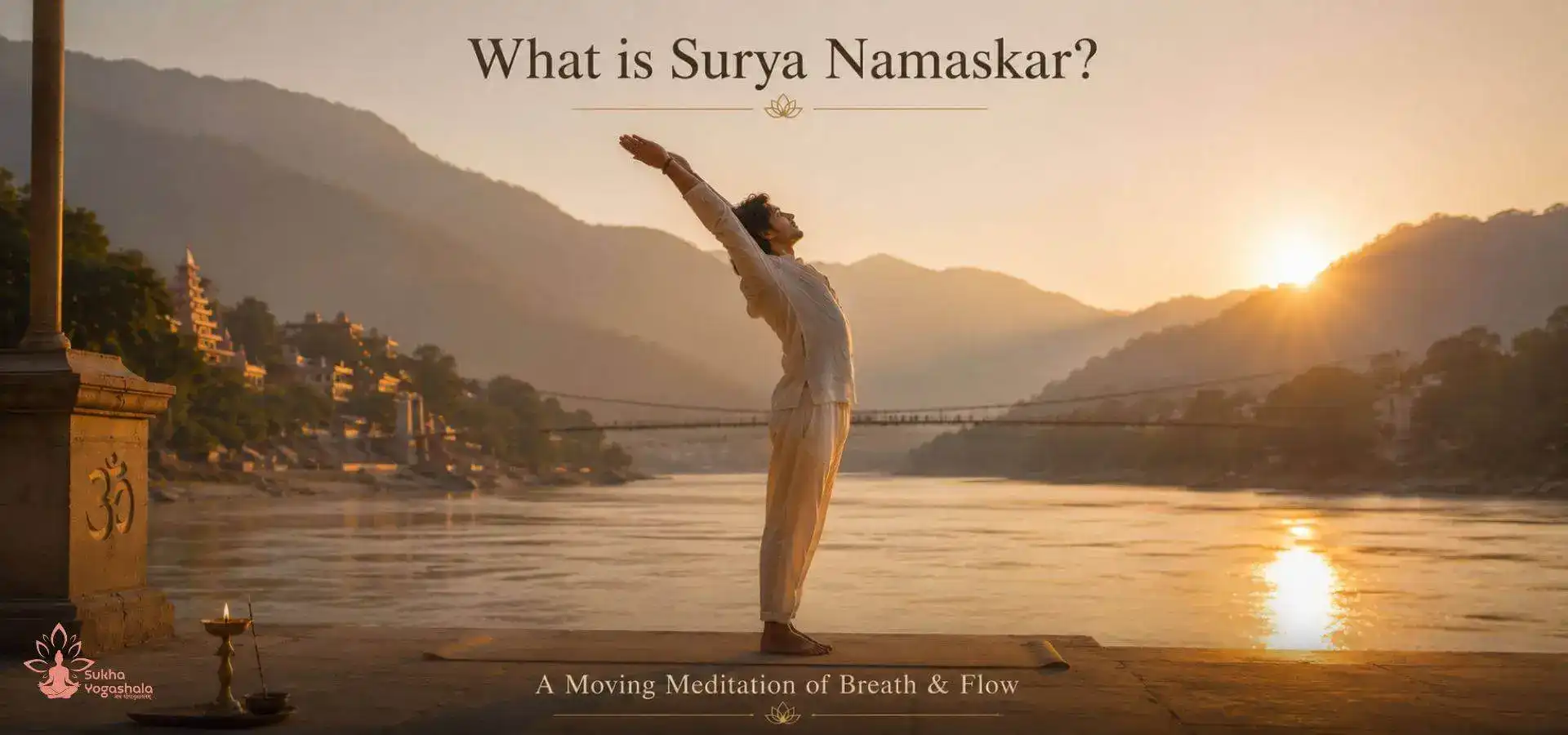
Surya Namaskar translates directly as “sun salutation”—surya meaning sun, namaskar meaning salutation or bow. This practice originated in ancient India as a devotional ritual to honor the sun, the source of all life and energy on earth.
But about surya namaskar, there’s more than religious symbolism. The sequence is a perfectly designed full-body workout that stretches, strengthens, and stimulates every major muscle group, organ system, and energy center in your body. Twelve poses flow seamlessly into each other, synchronized with the breath, creating a moving meditation that quiets the mind while energizing the body.
The importance of surya namaskar in traditional yoga cannot be overstated. It appears in classical texts like the Yoga Taravali and has been practiced by yogis for centuries as a complete daily practice unto itself. Even practitioners who do nothing else but Surya Namaskar maintain remarkable health and vitality.
Each pose has specific physical benefits—stretching the spine, strengthening the core, opening the chest, engaging the legs. The sequence systematically moves through forward folds, backbends, and neutral positions, ensuring balanced movement in all directions. The breath pattern oxygenates your blood, stimulates your lymphatic system, and calms your nervous system.
Modern variations exist, but the classical sequence remains most powerful when practiced with mindfulness and proper alignment.
The 12 Steps of Surya Namaskar: Complete Breakdown
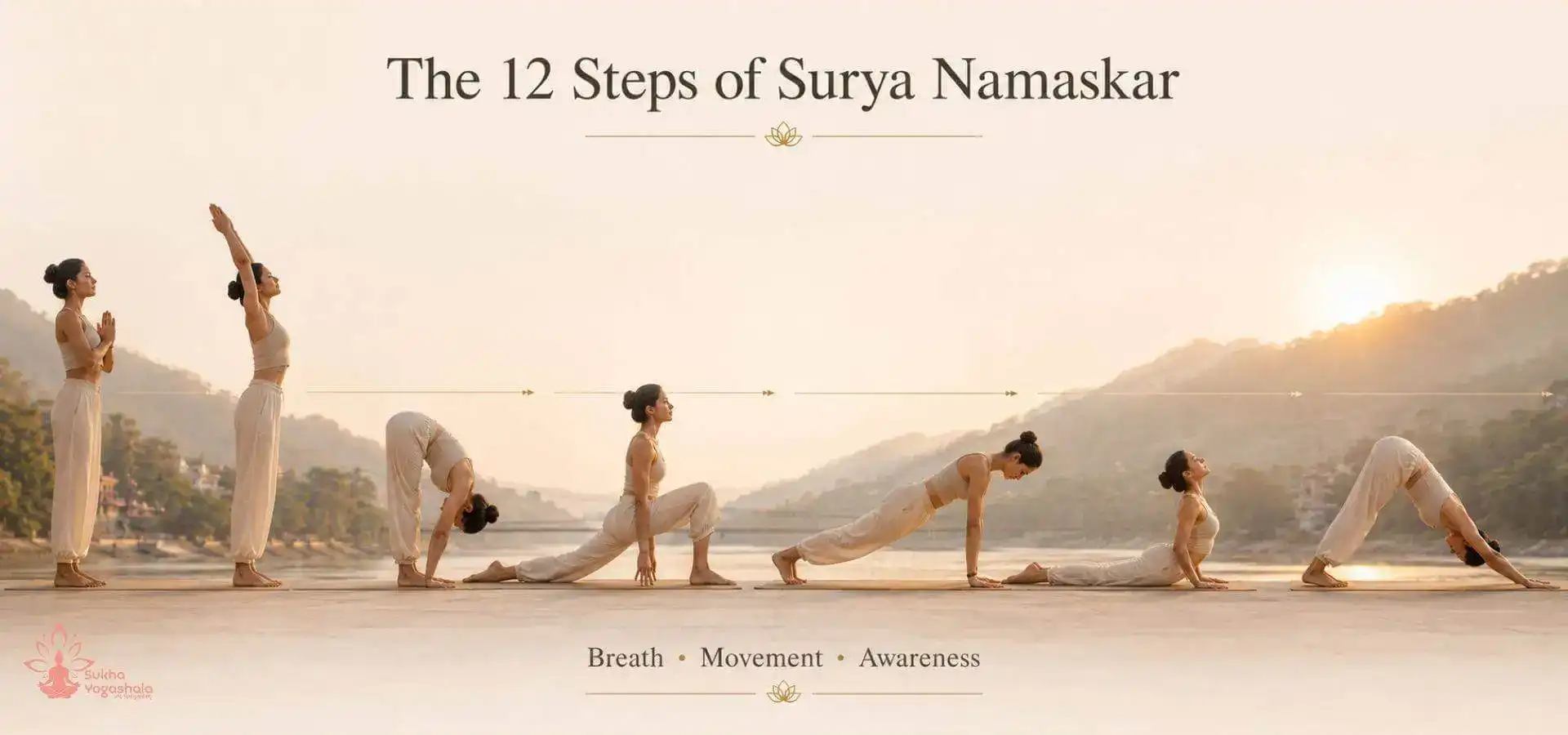
Understanding the benefits of surya namaskar steps requires knowing each position and its specific effects. Here’s the traditional sequence:
1. Pranamasana (Prayer Pose)
Stand tall, feet together, palms pressed at your heart center. Exhale fully. This centering moment sets your intention and brings awareness inward.
2. Hasta Uttanasana (Raised Arms Pose)
Inhale, sweep arms overhead, gentle backbend. Opens the chest, stretches the abdomen, engages the entire front body while strengthening the back.
3. Uttanasana (Standing Forward Fold)
Exhale, fold forward from the hips, hands to the floor beside your feet. Stretches hamstrings, calves, and spine while calming the nervous system.
4. Ashwa Sanchalanasana (Equestrian Pose)
Inhale, step right leg back into a lunge, knee to ground, gaze forward. Stretches hip flexors, strengthens legs, opens the chest.
5. Dandasana (Plank Pose)
Hold the breath, step left leg back to plank position. Builds core strength, arm strength, and full-body stability.
6. Ashtanga Namaskara (Eight-Point Salutation)
Exhale, lower knees, chest, and chin to floor, hips lifted. Works chest, arms, and core while preparing for backbend.
7. Bhujangasana (Cobra Pose)
Inhale, slide forward and lift chest, keeping pelvis grounded. Opens the chest, strengthens the spine, stimulates abdominal organs.
8. Adho Mukha Svanasana (Downward Dog)
Exhale, lift hips high, press back into inverted V-shape. Stretches entire posterior chain, strengthens arms and legs, inverts the body.
9. Ashwa Sanchalanasana (Equestrian Pose – other side)
Inhale, step right foot forward between hands, left knee down. Stretches the other hip flexor, creates balance.
10. Uttanasana (Standing Forward Fold)
Exhale, step left foot forward, fold over legs. Returns blood flow, stretches spine and hamstrings again.
11. Hasta Uttanasana (Raised Arms Pose)
Inhale, rise up with arms overhead, gentle backbend. Re-energizes, opens the heart, lifts the spirit.
12. Pranamasana (Prayer Pose)